Getting Ahead Through an Online Environment: ISCA Spotlights English Language Development
According to the most recent data from California’s Department of Education, approximately 1.2 million students are currently learning English as a second language in California public schools, around 19% of the total student population in the state. Insight Schools of California (ISCA) is set to work with its students remotely and support those students who are English learners.
The school’s English Language Development (ELD) team has witnessed firsthand students’ dedication to learning English and the successful path paved by online learning through ISCA.
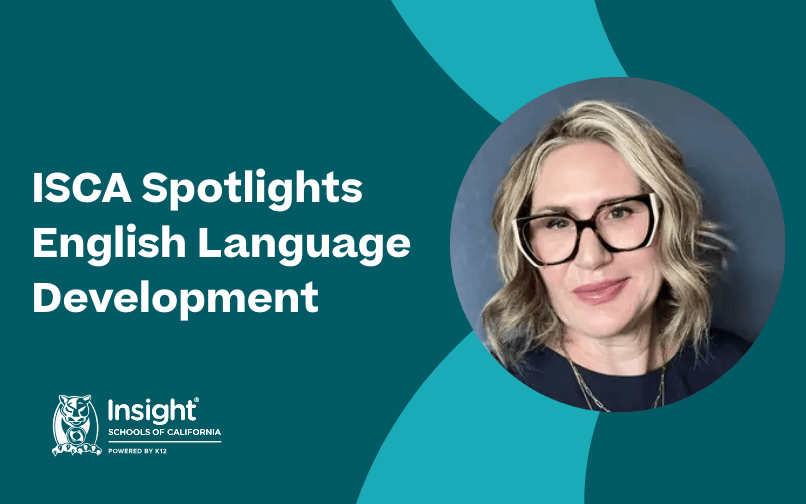
Audra Hollingsworth, an ELD specialist at ISCA, teaches English Language Development to students from diverse backgrounds, primarily Spanish and Arabic speakers. She joined ISCA earlier this year and has 20 years of teaching experience, including roles in Los Angeles and San Francisco.
Lyla Rodriguez, a bilingual engagement coach part of the Retention and Academic Intuitive Support Experts (RAISE) team, works with English Language Learners (ELLs), particularly seniors, to help them graduate. She is based in Riverside, California and has been with ISCA for three years and previously worked for 13 years as a community relations specialist.
How It Works
Newcomer students to ISCA take an ELPAC (English Language Proficiency Assessments for California) test to assess their English proficiency and placement in appropriate classes. Once enrolled, they start their coursework with an instructor like Audra. “I try not to speak a lot of Spanish when I’m teaching,” says Audra. “The students know that I speak Spanish, and I’ll answer clarifying questions, but I really want to build them up, so they feel confident speaking English.” Audra starts with basic assessments and phonics lessons. She scaffolds material and provides structure to help students feel confident and successful. Her teaching approach is built upon the use of sentence frames, vocabulary building, and visual literacy.
“I always want to set the student up for success. Every lesson we hit on all the different components of English language development – reading, writing, speaking and listening.”
She manages 10 one-on-one classes and two group classes with about 10 students each, with plans to expand to 30 new students this month.
On the other hand, Lyla creates personalized back-on-track plans for students who may be struggling to graduate.
She interacts with around 25 students daily, using personalized plans and translation tools like Zoom’s built-in translations and subtitles.
“I meet with them, and we discuss grades, attendance and their coursework,” she says. “In my sessions, they’re required to complete at least one assignment, and I’m there to support them if they need assistance with work.”
Overcoming Obstacles and Building Trust
Lyla points out that at times in her sessions, some students may not log in and feel uncomfortable participating and turning their camera on. However, Lyla says the school offers support and assistance, which benefits students who choose the online option for various reasons, including medical issues.
Lyla is also the chairperson of the English Learner Advisory Committee, which meets three times a year to gather feedback from parents and students. This trust-building centers on open and honest communication with students and their families. Lyla interacts with families, most of which are Spanish-speaking, through a program called Strong Start, teaching them how to navigate how ISCA operates.
Teachers like Audra also contact students and their families directly, often in Spanish. In the classroom, Audra highlights the importance of making mistakes and taking risks in the learning process for students and teachers. “What I’ve tried to do in my classroom, whether in-person or a remote setting, is to create a warm and inviting environment where students feel comfortable,” she said. “So much of learning a new language is putting yourself out there and making mistakes.”
The ISCA Difference
Audra emphasizes the benefits of ISCA’s remote, individualized learning approach, allowing personalized instruction and better student engagement. She also values the opportunity to learn from her students from different backgrounds, fostering a collaborative learning environment where all students participate and contribute.
“ISCA provides an opportunity for students who may have fallen through the cracks in a brick-and-mortar school, and it allows a more individualized learning environment,” she says. “ELLs sometimes have many more responsibilities than just going to school. Some students may work and take care of younger siblings. ISCA gives students the opportunity to go to school, but it also allows them to do other things besides going to school.”
“For a few of the students I work with, [ISCA] is their only option,” says Lyla. “It’s a great way to still have that education and complete their high school diploma without the issues they may face in an in-person school.”
The bond with the students is what Lyla enjoys most about her role at ISCA. “I care for them, hear their personal stories, and grow close with them,” she says. “I’m a mother, and at times, their stories break my heart, but the best part of working with them is getting to know them better, helping them get their high school diploma, and giving them that advantage in life.”
Back to BlogRelated Blog Posts

Welcome to the ISCA Blog
We are so excited to have you join us as we launch our blog! Insight School […]

ISCA Stands Strong with Families Amid California Wildfires
Families, students, and communities across the state have been profoundly affected by the recent California wildfires. […]

Class of 2025 Comes Together for In-Person Graduation...
This year, Insight School of CA (ISCA), Insight at San Diego (ISSD) and Insight at San […]